Launching a new website may be more challenging than it seems. You have to think about details such as domain name, design, content creation, SEO optimization, and other factors.
You should take all of them into consideration before publishing the site on the web. However, you should not use various online tools that you do not understand for website building. An appropriate combination can create a positive environment for your new website.
If your website is focused on business, portfolios, online shopping, and selling services, you should equip all the elements with the same level of comfort and performance.
This can be achieved, but only if you execute every step properly and prepare the content using relevant online instruments. The website building process requires attention and precision.
1. Find the Right Domain Tool for Your Website
Your domain is one of the first things you should check, as it will be the web address people will type into their browser to see your website.
Spend some time searching for a domain name that will appeal to your audience, be easy to remember, relevant to your brand, and simple to spell. For a new website, you can look at a few different registrars.
Dynadot
Dynadot provides domain registration, domain privacy for eligible domain names, DNS management, forwarding, and other useful website services. It can be one option to consider when comparing domain registrars.
Dynadot is a straightforward option if you are looking for a domain registrar. The interface of this platform will make your search easier and allow you to register a new domain and manage it as website grows.
GoDaddy
GoDaddy is also a popular choice that you can opt for, as it offers hundreds of domain extensions along with tools to help build and host website. It will serve you with additional website services, including web hosting, website building, business email, and online marketing solutions. Since GoDaddy has extensive resources and a familiar platform, you can choose it as a registrar for your new business.
Porkbun
Porkbun is another simple option if you want to compare a few different registrars and look at the range of extensions and pricing available. If you want an uncomplicated way to manage the website for your business, then you can select Porkbun.
First of all, choose a registrar which will make managing your domain very convenient once your website becomes active.
2. Choose a Reliable Web Hosting Tool
After you have registered your domain, it will be necessary to have reliable hosting that will allow you to launch website and will ensure its efficient functioning on the Internet. This hosting should offer high performance, security options, backups, scalability, and support of customers.
For your website, your hosting service must provide SSL and HTTPS for reliability, as well as compatibility with website-building platform. When it comes to a business website, proper hosting could assist in offering a more comfortable user experience with no unnecessary technical problems.
3. Opt a Website Builder That Fits Your Needs
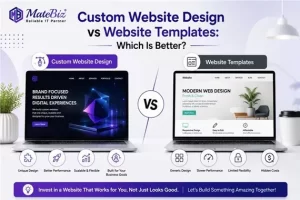
A website builder is a software platform that enables anybody to create website or web application without much knowledge of design and programming. Before choosing one, consider what website needs to achieve either customizing your website or choosing among a range of templates.
A website for service businesses must include a homepage, an About page, service pages, blog, and a contact page. In the case of an e-commerce website, the site should have a number of elements such as e-commerce features for product display and purchasing.
Make sure to select an online builder that has responsive design, SEO capabilities, forms, integrates analytics, and updates contents easily.
4. Plan Your Website Content Before You Build
In order to have a good quality and properly organized website, you have to think about the content which will help people find information they need.
Before you begin creating website, you should use several tools like Google Docs, Notion, or Trello to plan your pages and your content. As a part of this planning process, you should identify your target audience, the main pages of website, and the main topics to include in it, as well as the calls to action and the internal linking strategy you will be using.
Your homepage should introduce your company and its products or services. Service pages can contain more detailed information, while an About Us page is useful for presenting your business and team members. The contact page should be designed in such a way as to make it easier for customers to contact you.
Planning your content in advance can prevent disorganised pages and unnecessary information.
6. Secure Your Website Before Launch
Consider taking security measures starting from the moment of creating the website. Your web hosting service provider or the company that makes website should ensure the use of HTTPS and an SSL certificate for safe usage during transactions.
Use secure passwords and enable two-factor authentication if possible, always update the CMS, themes and other software of website.
Do not forget your domain account. Domain locking and two-factor authentication are just some of the security benefits that will offer you more protection.
Regular backups are also required because they will ensure that your website is easily restored from any accidental changes or other issues related to either technology or security.
9. Test Website Before Launch
Before announcing website, test it from a visitor’s perspective.
Make sure that buttons, links, contact forms, phone numbers, email addresses are working. Pay attention to menus and navigation to ensure that visitors have everything they need.
Check typos, broken images, inconsistent spaces, outdated information, mobile compatibility, and page loading time. Check if HTTPS is properly configured, there are redirects and other important functions.
Testing may be considered the last step; however, it will allow avoiding some issues that could have been prevented.
10. Quick Website Launch Checklist
Before publishing website, check:
- Domain and hosting are connected
- HTTPS/SSL is working
- Pages work on mobile and desktop
- Forms, buttons, and links work
- Page titles and meta descriptions are optimised
- XML sitemap is available
- Analytics and Search Console are configured
- Images and page speed have been checked
- Content has been proofread
- Backups and security measures are in place
11. Final Thoughts
Creating a website can be made easier when approached by taking one step at a time. Domain and hosting, content planning, creating an efficient design, website security, setting up analytics and SEO, and testing become key stages prior to the launch of a website.
You do not need every digital tool available. Invest in quality tools that address your present needs and will help build a website that is safe, convenient to use, fast and scalable.
Your brand new website is not just supposed to launch, but to have an excellent start. Let professionals assist you in building a high-quality and future-proof website.






 Manoj Sharma
16/09/2026
Manoj Sharma
16/09/2026